Ending the raid-and-return cycle.
Ghana has fought galamsey for decades. The problem was never effort it was timing. Every measure begins after the damage is done. Here is how EcoHealth changes that, and what we need to finish the job.
The operations Ghana has tried
The state has not been idle. Since 2017 it has mounted some of the largest enforcement efforts in the country's history:
Operation Vanguard
2017 – 2021A joint military–police task force of roughly 400 personnel, launched in July 2017 alongside a nationwide ban on all small-scale mining. Vanguard swept the Ashanti, Eastern and Western regions, seizing and burning excavators and closing unlicensed pits. Its success was reported in seizures and arrests hundreds of miners detained, hundreds of machines confiscated. It was suspended and then dissolved in 2021.
Operation Halt II
2021 – 2022A military operation ordered to remove every person and every machine from the water bodies the Pra, Offin, Ankobra, Birim and Ayensu and from forest reserves. In one phase alone, 401 soldiers stormed the Ankobra. Equipment was destroyed on the spot: dozens of excavators, hundreds of changfan dredges and pumps. It was later relaunched with chiefs and district executives empowered to report offenders.
NAIMOS
2025 – presentThe National Anti-Illegal Mining Operations Secretariat the newest iteration, coordinating sweeps along the same rivers, including the Ankobra, that Operation Halt cleared four years earlier. The fact that the same rivers need clearing again is the whole story.
Why every operation starts too late
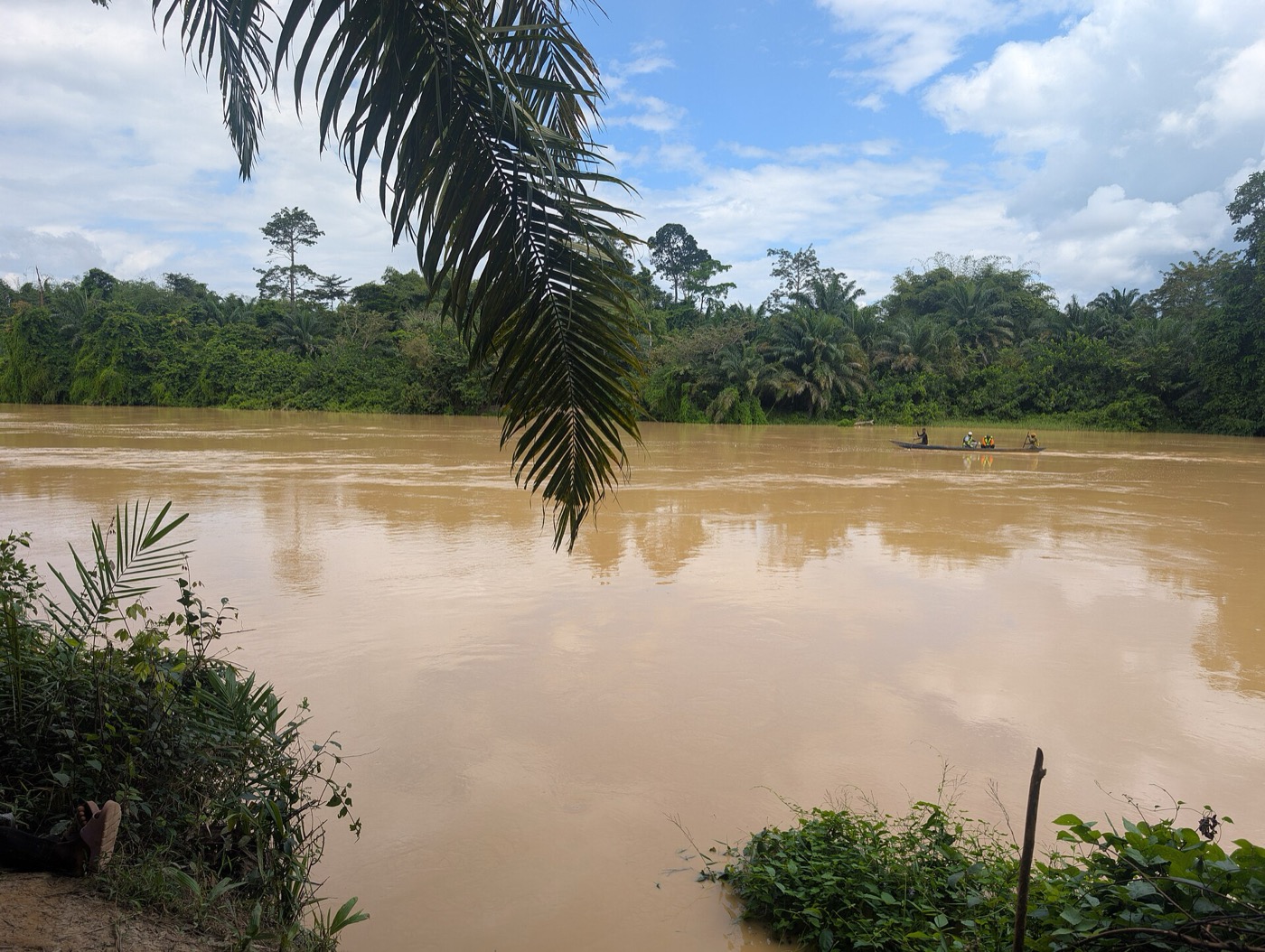
Look at what triggers each of these deployments: devastation that has become impossible to ignore. A river turns brown on the evening news, a forest reserve is stripped, and only then does a task force roll out. Success is measured in machines burned and miners arrested never in hectares that were not destroyed, because by the time the operation begins there are none.
And when the sweep ends, the soldiers leave. Nothing stays behind at the site. The miners wait, then walk back to the same pits and continue where they stopped. Vanguard gave way to Halt; Halt gave way to NAIMOS; the rivers are still brown. The cycle devastation, raid, withdrawal, return is the one constant.
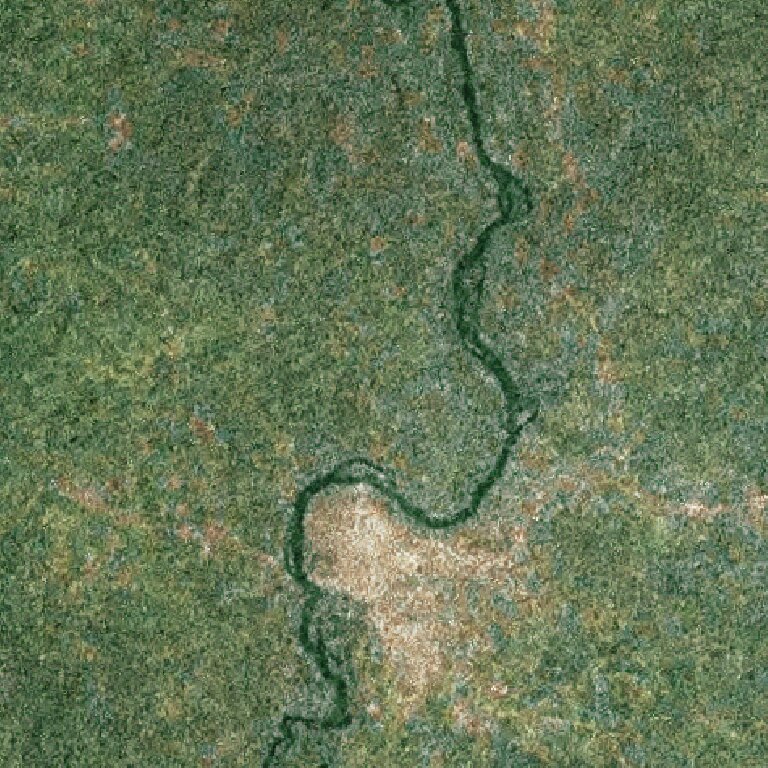
2016 — the Pra runs dark and clean
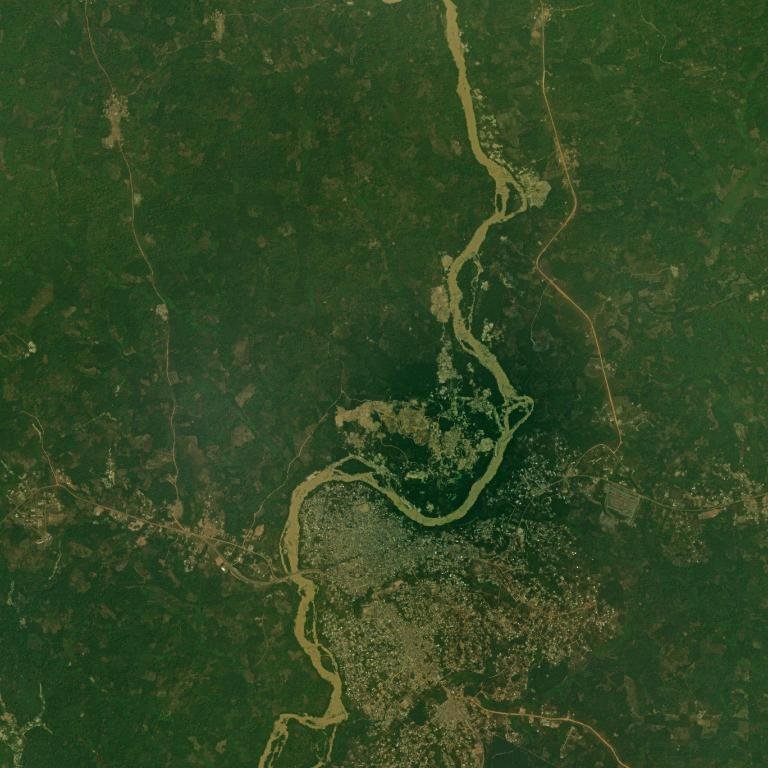
2025 — sediment-choked, banks scarred
What EcoHealth already does: catch it early
EcoHealth scans Ghana's mining belt automatically every Monday using Sentinel-2 satellite imagery and a detection model we trained on thousands of real mining sites. That weekly rhythm is the point: a brand-new site shows up in our data within days of breaking ground not months later when the damage is irreversible. Early detection turns enforcement from an autopsy into an intervention.
Version 2: drones stationed at the hotspots
This is the part your support funds. We plan to place drone stations at the known hotspots and, if resources allow, in nearly every region. When the Monday scan flags a new site, or shows an old site still in action, a drone deploys to check it out: high-definition footage, exact GPS location, evidence of people and equipment on the ground.
That package imagery, coordinates, footage goes straight to the authorities. No more acting on rumor or arriving weeks late. They will know exactly where to go, what they will find, and how active the site is before a single vehicle moves.
The policy we're pushing for: stay, don't sweep
Detection and evidence only matter if the response breaks the return cycle. Our proposal to the authorities is simple: when a site is cleared, enforcement presence stays not for a week, but permanently stationed for five months, six months, a year, depending on how active the site was. When miners know a post is staying, there is nothing to come back to. That is the difference between interrupting galamsey and ending it at a site.
Two Ghanas, one model
Ghana is not one landscape. The south, where our model was trained, is dense forest a fresh mining scar stands out as a pale wound in dark green canopy. The north is savanna: drier, sandier, with naturally exposed soil that can look exactly like a mining scar to a model that has only ever seen the forest belt.
Making detection reliable nationwide means building a labeled dataset of northern terrain and retraining the model on it and training runs of this size cost real money in GPU compute. This is the other half of what donations fund, alongside the drone program: a model that is as sharp over the savanna as it is over the forest.
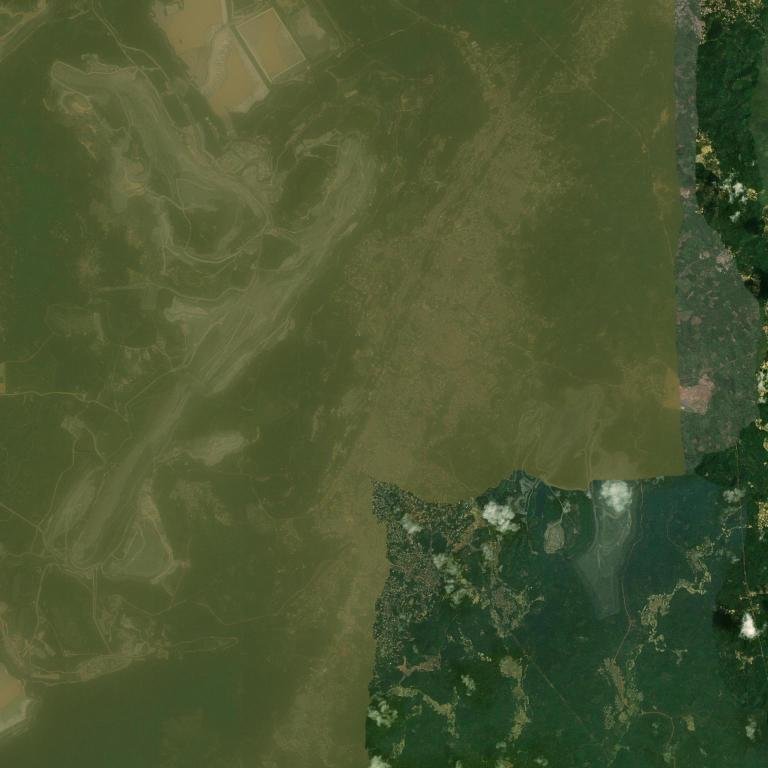
The south: forest belt (near Tarkwa)
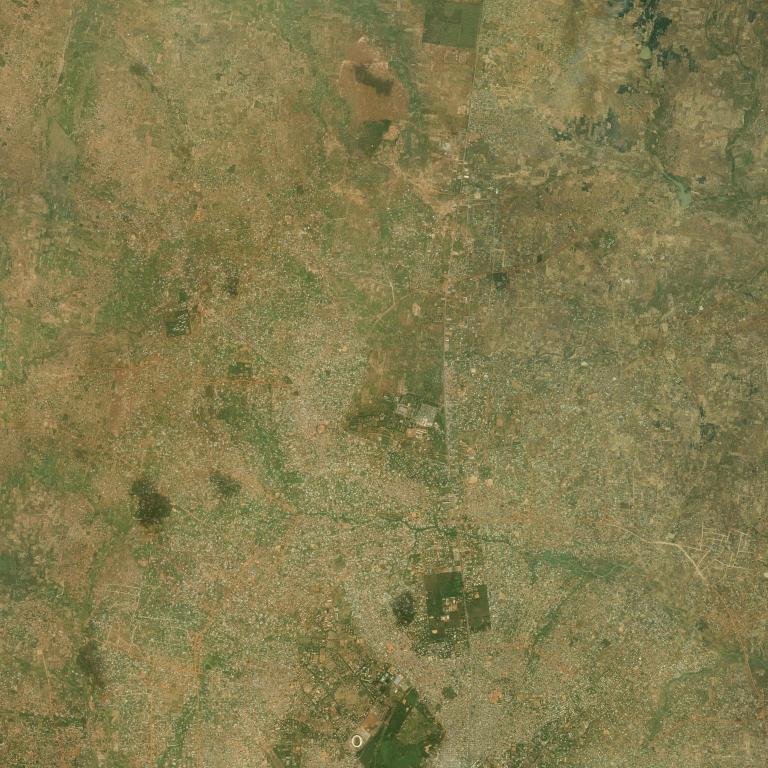
The north: savanna (near Tamale)
Filtering out the legal mines
Not every mine we detect is illegal. We have found public records of licensed small-scale operators, but the lists are outdated. We are asking the government to share a current registry of legal concessions so we can filter them out automatically leaving only genuine galamsey on the map, and keeping licensed operators out of enforcement's way.
Early detection is already running. Drone verification, a nationwide model, and sustained enforcement are what come next and they are within reach.
Sources
- Operation Vanguard — Wikipedia
- "Operation Vanguard launched to wipe out galamsey" — Graphic Online, 2017
- "Phase 4 of Operation Halt begins on Ankobra River with 401 soldiers" — Citi Newsroom, 2021
- "Operation Halt II relaunched" — Graphic Online
- "Halt and Vanguard: two military operations in Ghana and their consequences" — Danish Institute for International Studies